
Shockwave Therapy — Used the Right Way
Short, high-energy mechanical pulses to stimulate healing in stubborn tendon and fascia pain — always paired with the right loading plan.
EXCELLENTTrustindex verifies that the original source of the review is Google. I've been under Mohammad's care for years. I always follow his advice and put in the work and I think this is the main reason I'm still enjoying an active lifestyle. He keeps my body working the way it should and I am very thankful to have been referred to him.Posted onTrustindex verifies that the original source of the review is Google. Mohammad is a magician - truley. I moved from BC to Toronto recently and i’d been in physio treatment for over 4 years with a nerve issue in my left thigh. Mohammed was able to diagnose this issue immediately and with the right exercises and sessions it improved within a week. He’s also extremely passionate about helping people and that means a lot when trying to fix ongoing issues! Thank you for everything!Posted onTrustindex verifies that the original source of the review is Google. Mohammad is truly exceptional. I've been seeing him for over 5 years, and despite him moving clinics a few times, I've followed him wherever he goes. He’s the first and only physiotherapist who has provided real solutions and successfully fixed my neck, shoulder, and back pain. He accurately diagnoses the root cause of issues and delivers highly effective treatment—I've felt 100% better after every first visit. He also teaches simple exercises that I can easily do at home. I highly recommend him!Posted onTrustindex verifies that the original source of the review is Google. Mohammad is an absolute gem. I have been treated by him twice, and in just one session each for two different ailments he has managed to obliterate my pain. He knew exactly what to do and where to treat just by watching me walk. I've suffered years of tension headaches without ever getting an answer from either my GP or any other doctors I've been to, and yet a simple needling session and an exercise with a towel, I repeat, A TOWEL, has managed to decrease the frequency of my headaches. Sessions are always fun and I learn something new from him every time. Highly HIGHLY recommend him! Thanks Mo you're a star! ⭐Posted onTrustindex verifies that the original source of the review is Google. Very professional.. Easy to discuss what needs to be worked on.. Always has a plan for effective remedies.. I have recommended Mo to many of my friends..Posted onTrustindex verifies that the original source of the review is Google. Mohammad is THE BEST. This is the third clinic I've followed him to. If you're looking for a physiotherapist who is super energetic and passionate about helping get to the root cause of what ails you, takes the time to help you understand your anatomy and body and how things work, then definitely book him. I'm the type that wants to know what's happening so I can improve and prevent future injuries. Mohammad always spends the time and uses various media to help me learn. EDIT: I noted that this is the third clinic I've followed Mohammad to in order to illustrate that he's INCREDIBLE and has earned a loyal follower. Will follow him to 4,5,6 etc because the results speak for themselves! ✊❤️🔥🙏Posted onTrustindex verifies that the original source of the review is Google. I highly recommend Mohammad! He is super knowledgeable, skilled, intuitive and extremely caring. Very impressed by how you can go to him with almost any physical issue and he can quickly find a way to approach your treatment and offer exercises/stretches that will speed up your recovery and help you maintain your well being.Posted onTrustindex verifies that the original source of the review is Google. Mohammad has been a life savior for me and is a stellar physiotherapist. Before meeting Mohammad, I had spent the better part of a year with various health care professionals to address a reoccurring hip issue with no success. After just two visits with Mohammad he figured out the reasons for the pain and initiated a treatment plan. The pain and discomfort was impacting all aspects of my life (not only while mobile/active but while in neutral sitting position too) and I am so thrilled to say that this is now all behind me and I can walk, run, ride and sit pain free!! Mohammad is a good communicator and provides videos to demonstrate home exercises. I cannot thank Mohammad (or recommend him enough).Posted onTrustindex verifies that the original source of the review is Google. I've been seeing Mohammad for the past couple years for neck and scapular pain and immobility from wrestling. He really knows his stuff and is always dabbling with new tech and information to provide the best treatment. His dry needling ability helped release the knots in my neck and then he gave me a really good neck adjustment. Would definitely recommend.Verified by TrustindexTrustindex verified badge is the Universal Symbol of Trust. Only the greatest companies can get the verified badge who has a review score above 4.5, based on customer reviews over the past 12 months. Read more
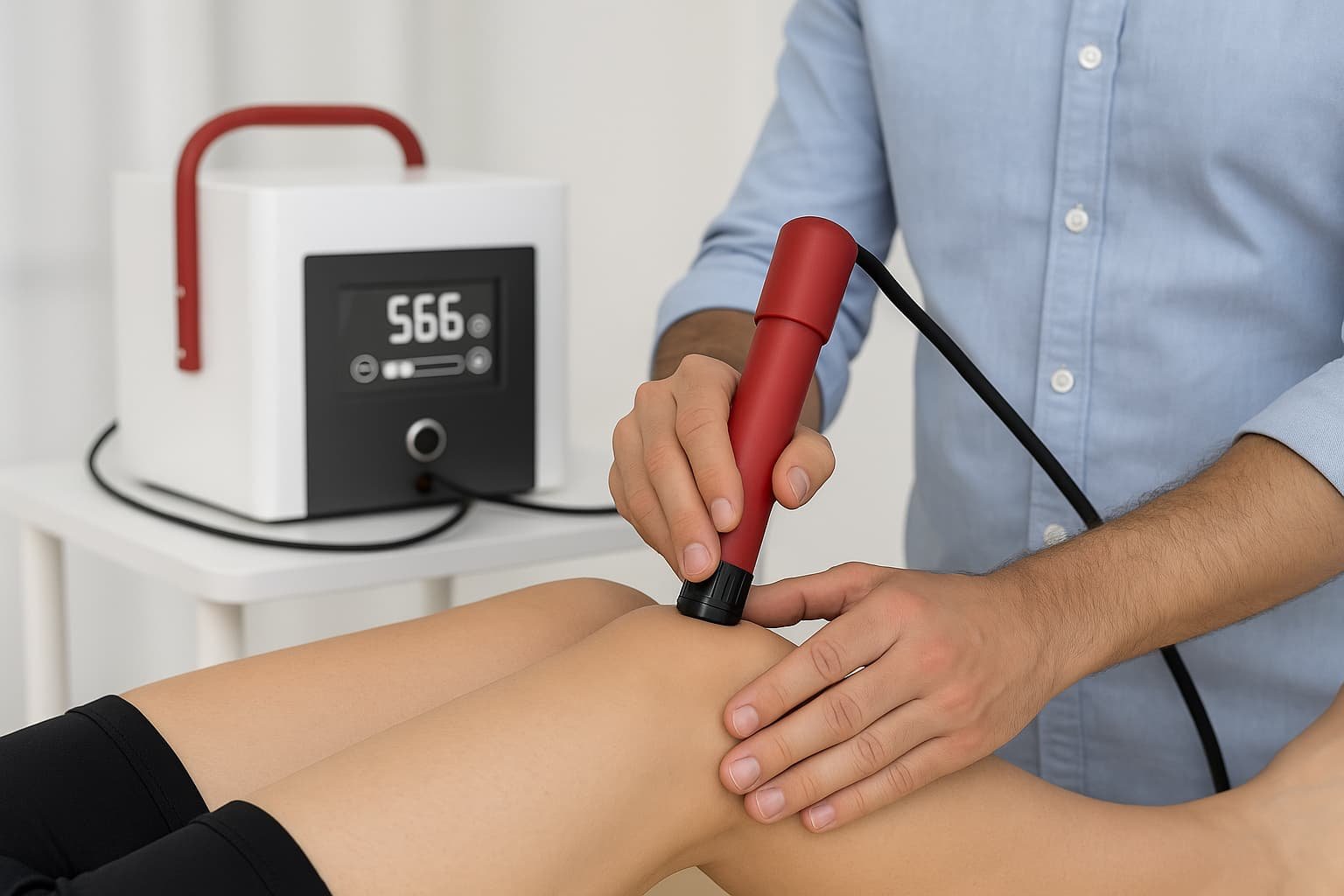
How we decide if shockwave is appropriate
Shockwave isn’t prescribed by default. We first assess movement, strength, and load tolerance. If shockwave adds value, we integrate it at the right time — not too early, not too late — to support tissue adaptation and recovery.
When Shockwave Makes Sense
Best for:
- Pain that hasn’t responded to rest or basic rehab
- Tendon or fascia pain lasting 3+ months
- Localized pain aggravated by loading
- People willing to follow a loading plan
Not ideal if:
- You’re unable to tolerate progressive loading
- You’re looking for a passive, one-session fix
- There’s significant nerve involvement
- Pain is acute and inflammatory
What it helps with
Shockwave works best when combined with MVMT
Shockwave therapy reduces pain and stimulates tissue healing — but long-term results come from restoring load tolerance.
At MVMT Kinetic, shockwave is always paired with targeted exercise and MVMT retraining to ensure results last beyond symptom relief.
Book a Shockwave Assessment
We’ll assess whether shockwave fits your condition — and build a plan around it.
What to expect?
Typical timeline
• Assessment 1hr / Follow-up 30min
• Most people need 3–5 sessions
• Usually spaced 1–2 weeks apart
• Symptom ease after 1 session
Assess & Confirm
Before shockwave begins, we confirm that your pain is coming from a tendon or fascia issue that’s appropriate for treatment. We assess movement, loading tolerance, and symptom behavior to ensure shockwave is being used for the right reason and at the right time.
Load & Move
Shockwave works best when paired with movement. You’ll be given simple, targeted loading or mobility work to guide tissue adaptation between sessions. This step is critical — it’s how results last beyond pain relief.
Targeted Shockwave Treatment
Shockwave delivers short, controlled mechanical pulses to the affected tissue. Treatment typically lasts 5–10 minutes per area and is adjusted to your tolerance. You may feel discomfort, but it should remain manageable and brief.
Reassess & Progress
We reassess symptoms, function, and tolerance over a short series of sessions (commonly 3–5 sessions, spaced 1–2 weeks apart). If progress stalls, the plan changes — shockwave is adjusted, paused, or discontinued as needed.
Shockwave therapy is most effective for chronic tendon and fascia-related pain, especially when symptoms have plateaued with rest, exercise alone, or other conservative care.
Conditions It Can Help
Foot & Ankle
Plantar fasciitis / plantar heel pain
Chronic heel pain
Mid-portion Achilles tendinopathy
Insertional Achilles tendinopathy (case-dependent)
Peroneal tendinopathy
Posterior tibial tendinopathy
Knee
Patellar tendinopathy (“jumper’s knee”)
Quadriceps tendinopathy
Chronic anterior knee pain related to tendon overload
Hip & Pelvis
Greater trochanteric pain syndrome (gluteal tendinopathy)
Lateral hip pain
Proximal hamstring tendinopathy
Adductor tendinopathy
Shoulder
Calcific rotator cuff tendinopathy
Non-calcific rotator cuff tendinopathy
Chronic shoulder tendinopathy resistant to exercise alone
Elbow
Lateral epicondylitis (tennis elbow)
Medial epicondylitis (golfer’s elbow)
Other Tendon & Fascia Conditions
Chronic tendinopathies that have plateaued with rehab
Post-surgical or post-injury tendon pain (when appropriate)
Persistent soft-tissue pain where tissue loading tolerance is limited
Shockwave therapy is supported by clinical research for chronic tendon and fascia conditions when used alongside progressive loading.
FAQ
What to Know Before Starting Shockwave
1. What happens if shockwave doesn’t help my pain?
If shockwave doesn’t produce meaningful change within the first few sessions, we stop using it. We don’t continue treatments that aren’t moving the needle. <p>
That’s why shockwave at MVMT Kinetic is always paired with reassessment and a loading strategy — so we can pivot early if your body needs a different approach.
2. Why can’t I just keep doing exercises or manual therapy instead?
For many people, exercise and hands-on care are enough. <p>
Shockwave is considered when tissue has stopped adapting — often after weeks or months of rehab where pain plateaus despite doing the “right things.” <p>
In those cases, shockwave can help restart the healing response, so exercise and movement start working again.
3. Is shockwave safe — and is it backed by evidence?
Yes. Shockwave therapy is supported by clinical research for specific chronic tendon and fascia conditions, particularly when combined with progressive loading. <p>
That said, it’s not appropriate for everyone — which is why we assess movement, tissue tolerance, and training load before recommending it. <p>
If shockwave isn’t a good fit, we’ll tell you. <p>