When Pain Makes
Every Movement Feel
Like a Threat.
When pain sensitivity is the barrier — not structure, not weakness — acupuncture calms the system so movement stops feeling dangerous and rehab can begin. Always an option, never an obligation.
Start My Recovery →Acupuncture Works Best When—
Acupuncture is most useful when pain sensitivity, muscle guarding, or nervous system stress is limiting movement or recovery — when the whole system needs calming, not just a specific tissue.
- Pain sensitivity that makes loading uncomfortable to begin
- Persistent low back, neck, or joint pain with a stress or tension component
- Muscle guarding that isn't responding well to manual therapy alone
- Tension-related headaches or jaw pain (TMJ)
- Pain flares during rehab or training that disrupt progression
- Sleep or recovery issues affecting overall healing capacity
"Acupuncture is never mandatory. It's used when it helps you move, load, and progress more comfortably alongside exercise and hands-on care. If it's not the right tool for your presentation — we won't use it."
How It Works at MVMT Kinetic
-
01
Assessment first
Confirm acupuncture adds value to your plan
We assess movement, symptoms, and sensitivity to determine whether acupuncture helps your specific presentation. Point selection is based on your assessment and response to testing — not a fixed protocol.
-
02
Targeted acupuncture
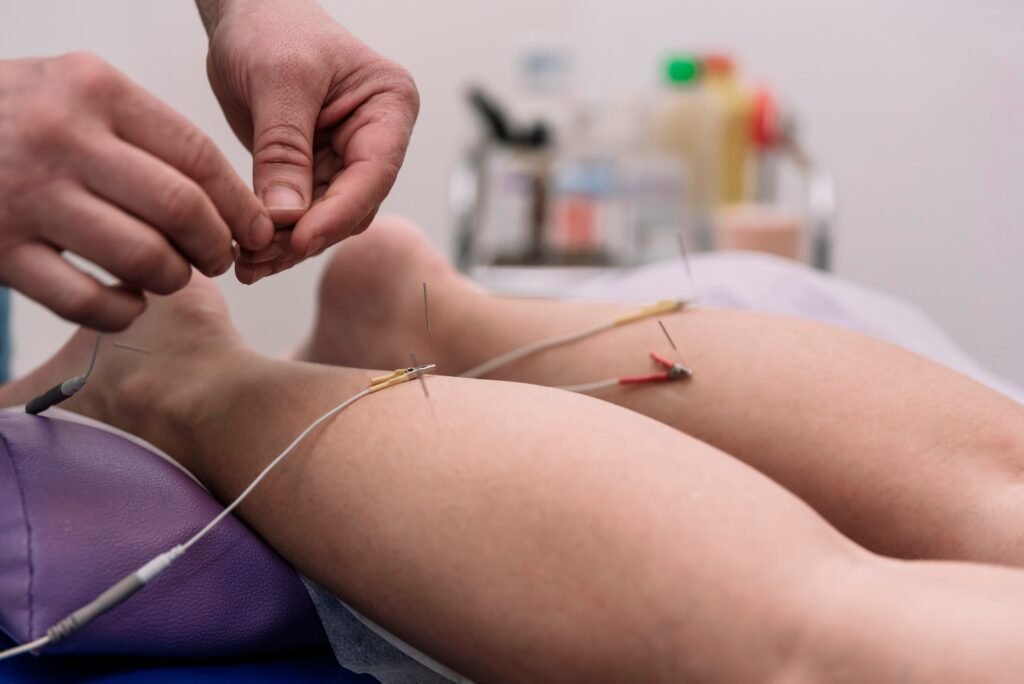
Fine sterile needles to reduce sensitivity and guarding
Points are selected to calm the nervous system, reduce local pain sensitivity, and reduce protective muscle tension. Sessions are adjusted to your tolerance and response — never a one-size approach.
-
03
Integrated with movement
Exercise immediately after to lock in the change
Acupuncture is paired with corrective exercise or hands-on care so improvements carry into real movement and function. Calming the system is only the first step — loading it correctly is what makes the change last.
No referral required · Full assessment on your first visit
During and After Treatment
You may feel tingling, heaviness, warmth, or a dull ache around the needle points — these are normal signs the body is responding. Most patients describe the sensation as mild and settles quickly.
Mild soreness can last up to 24 hours. Many patients notice a sense of relaxation, easier movement, and less tension afterward — often within the same session.
Acupuncture works best as part of an integrated plan. The calming effect creates a window for exercise and loading — which is always the next step in the session.
Why Acupuncture Is in the Toolkit
- Calms pain sensitivity so movement feels easier and less threatening
- Reduces muscle guarding and protective tension that limits range of motion
- Improves tolerance to exercise and loading by reducing the baseline sensitivity level
- Complements manual therapy and corrective exercise — makes both more effective
- Useful for persistent pain conditions where sensitivity is the primary barrier to progress
- Safe and low-risk when performed by a trained physiotherapist
Before You Book
We most commonly use acupuncture for persistent pain conditions such as low back pain, neck pain, knee pain, headaches, and nerve-related symptoms — especially when pain sensitivity is limiting movement or exercise progression. It's also useful for TMJ and stress-related pain patterns.
Point selection is based on your movement assessment, symptoms, and response to testing — not a fixed protocol. We choose points that help calm the nervous system, reduce local sensitivity, and support better movement patterns for your specific presentation.
Most people feel a mild ache, warmth, or heaviness that settles quickly. Acupuncture is very low risk when performed by a trained provider. Mild soreness can occur but serious side effects are rare. We screen thoroughly before every session.
No. Acupuncture is never mandatory. It's one tool in the toolkit — used when it helps you move, load, and progress more comfortably alongside exercise and hands-on care. If it's not right for your presentation, we won't recommend it.
Dry needling targets specific muscle trigger points based on anatomy and movement assessment — aimed at reducing local muscle tension and improving function. Acupuncture is rooted in broader nervous system regulation and is particularly useful when whole-system sensitivity is the issue. At MVMT Kinetic, we choose whichever approach best fits your presentation.
If We Can't Find It, We'll Find Who Can.
You don't need to know what you need before booking. The assessment tells us which tools will help. And if we can't find your mechanical driver — we say so.
You aren't just paying for a session — you're paying for an answer. If we can't find your mechanical driver in visit one, or meaningful change within two to three weeks, we give you a direct roadmap to the specific specialist in Toronto who can. No guesswork. No endless loops.
No referral required · Book online in 2 minutes
Pain sensitivity making
every movement feel wrong.
One assessment. The right tools identified for your pattern.
Start My Recovery →151 Bloor St. W · Suite 890 · Yorkville · (647) 957-7761