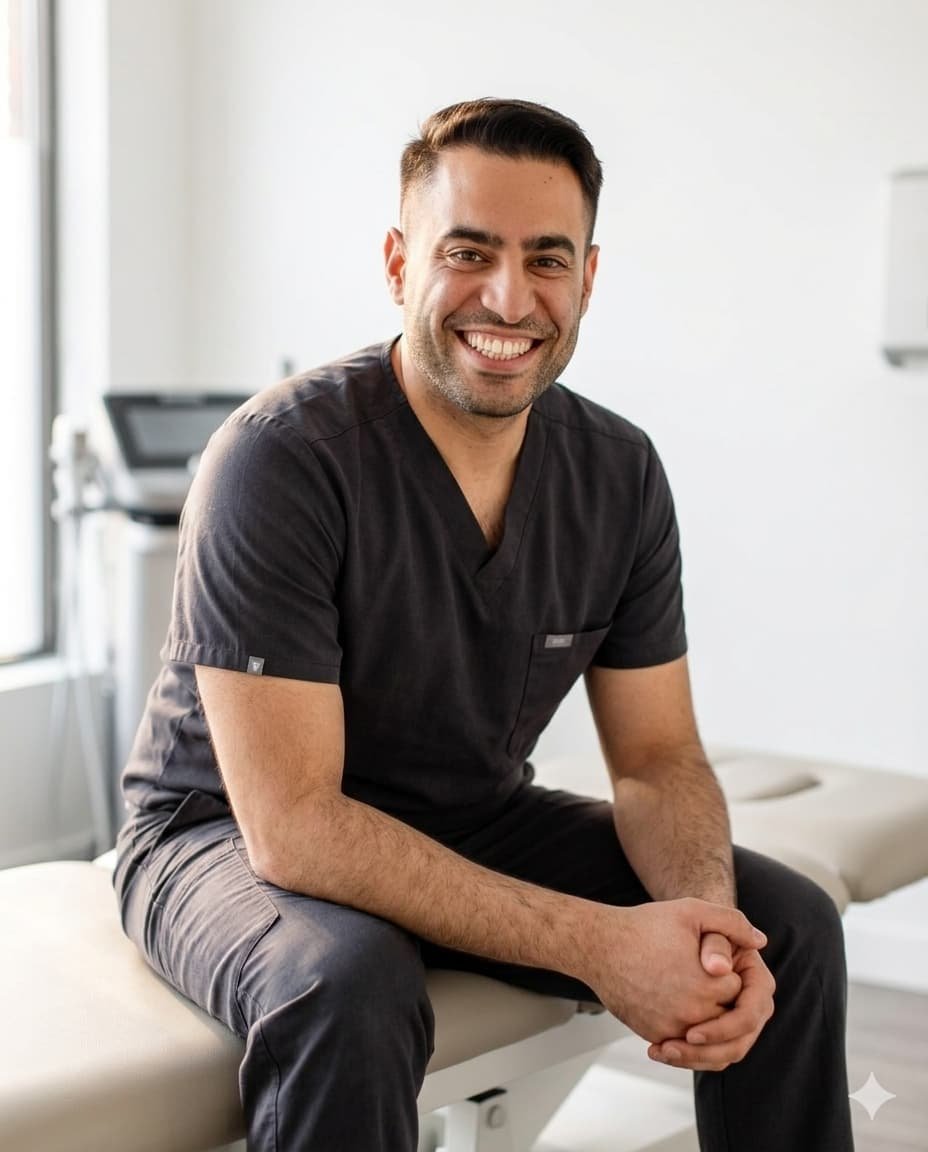
I built this clinic
to get you better —
not to keep you
coming back.
My name is Mohammad. This is why I do what I do — and how I do it differently.
"I just wanted to help people get what they actually need. Not keep them in treatment forever. I wanted to build a place where people trust that something will actually change — where they leave feeling different than when they walked in."
The Degree Wasn't the Point.
I spent a long time in school — a Doctorate, a Masters, multiple certifications. I did it because I wanted to understand musculoskeletal pain at a deep level.
But after years in the field, I realised something humbling. All of that education didn't matter if I couldn't help someone move better in their daily life.
Knowing the anatomy of a joint is not the same as knowing why that person's pain keeps coming back. One is information. The other is clinical judgment. They're not the same thing — and the system often rewards the first while measuring very little of the second.
That tension is what pushed me to keep looking. To keep asking better questions. And eventually to build something that held itself accountable to actual outcomes.
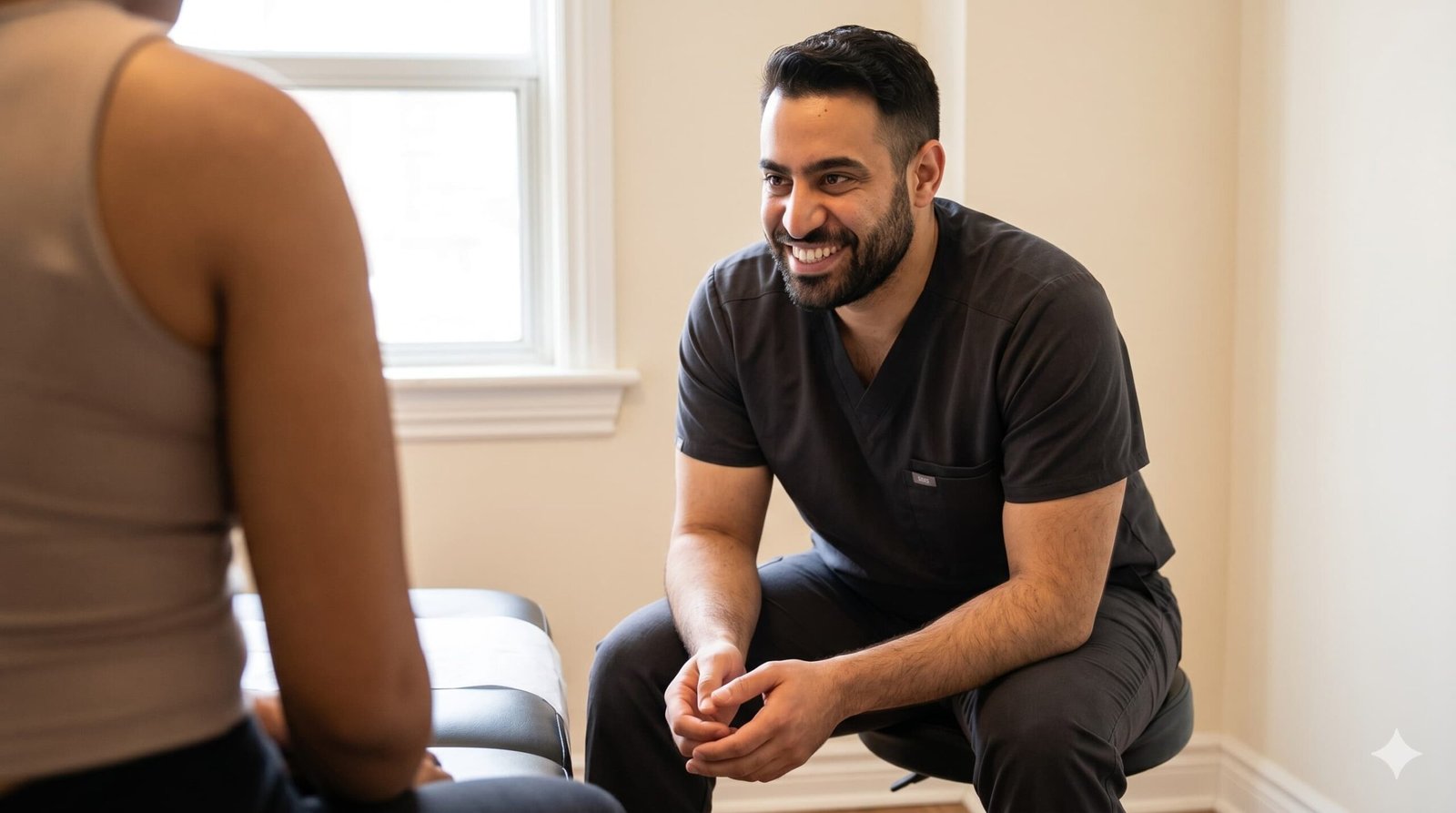
The Question That Changed Everything.
Over the years, I've worked with thousands of people who were stuck in the same loop. Getting better for a week. Coming back. Getting better for a week. Coming back.
It was frustrating for them. And if I'm honest — it was frustrating for me too. Because I could see they were trying. Doing their exercises. Showing up. And still not getting where they needed to go.
I started asking a different question. Not "where does it hurt?" — but "why does it keep coming back even when the MRI looks perfectly normal?"
That question led me to look at the whole movement chain. To understand that pain at one location is almost never caused only at that location. To build an assessment process that actually finds the switch — the mechanical error that imaging misses and that generic rehab never corrects.
That question is why MVMT Kinetic exists.
How the Thinking Evolved
Not a career timeline. The moments that actually changed how I practice.
-
The frustrationI watched good patients get stuck in the management loop.
Clinic after clinic, the model was the same. Keep patients comfortable. Keep them coming back. I understood why — it works financially. But it wasn't why I trained. I trained to solve problems.
-
The questionWhy does the pain come back when the MRI looks normal?
Most of the time, imaging shows nothing serious. But the patient is still suffering. That gap — between what the scan shows and what the person experiences — became the most important clinical question I'd ever asked.
-
The technologyI found a way to measure what I was seeing clinically.
When I came across force measurement and movement analysis technology, something clicked. For the first time, I could show a patient exactly where their loading pattern was failing them — not just tell them. Data that makes the invisible visible. That became the AiM Lab.
-
The clinicI built a place where the goal is always discharge — not dependency.
MVMT Kinetic exists around one premise. Every patient deserves to know what's driving their pain, what we're going to do about it, and when we expect them to be done. Not managed. Resolved. And if we can't do that — we say so, and we point them toward who can.
Three Things That Never Change.
Root-cause, every time
I don't treat the spot that hurts. I find the switch — the mechanical loading error that's been sensitizing your tissue. Fix the switch, the pain stops coming back.
You are the measure of success
Not a clinical outcome scale. Not a satisfaction survey. The measure is whether you can do the things that matter to you — without pain, without fear, without coming back indefinitely.
Your fix stays with you
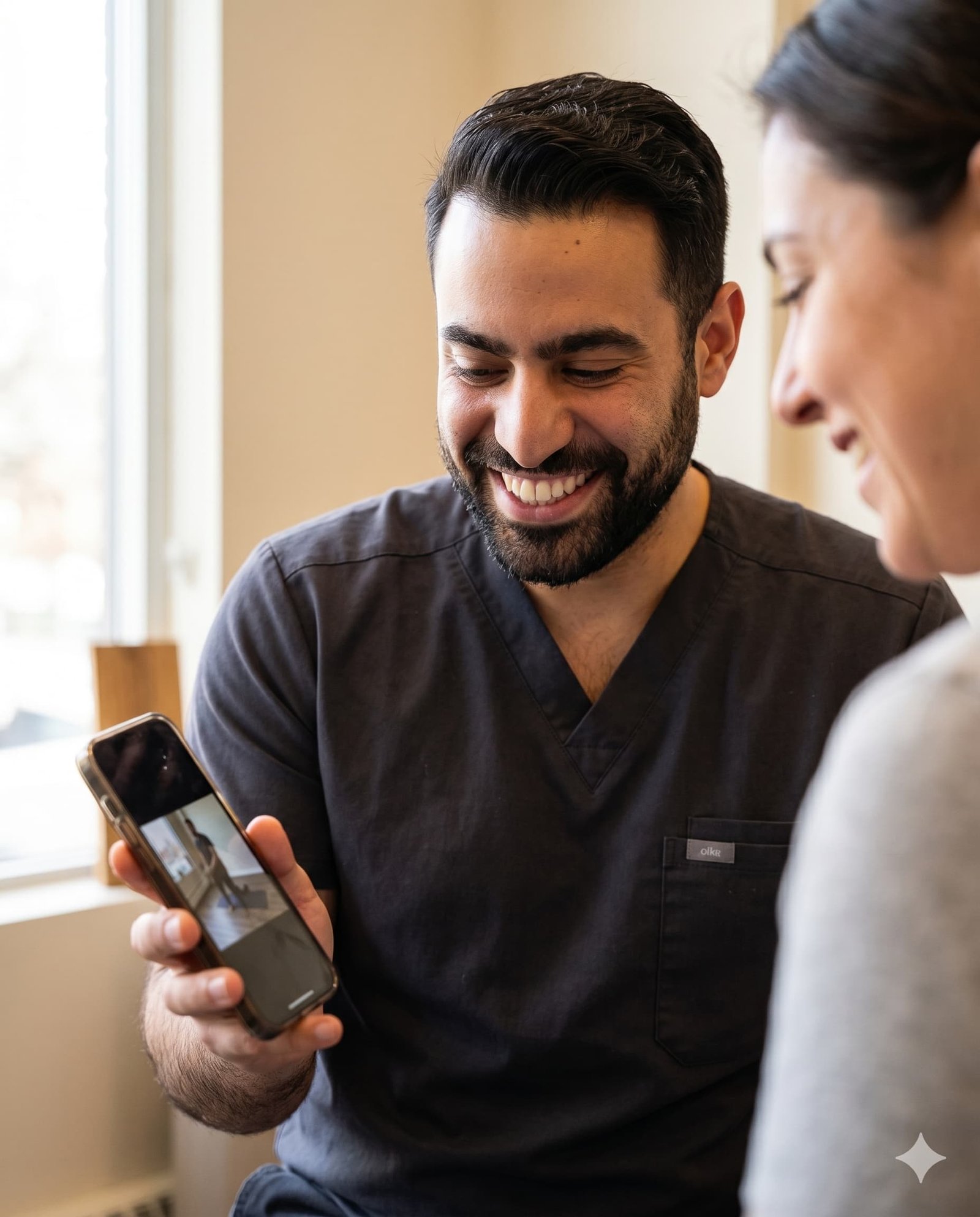
Whatever we find — I record your exact correction on your phone before you leave. A masterclass in your pocket. Not a paper sheet. Not something you have to remember. Yours, forever.
Why I Record It on Your Phone.
I know how hard it is to remember exactly how to do exercises from a sheet of paper. You get home, you're not sure if you're doing it right, and the uncertainty makes you do it less.
So I just record it. Right there in the session, on your own phone — me explaining exactly what to do, how many reps, what to feel for, what to watch out for.
You leave with a masterclass in your pocket. Not because it's a clever system. Because I want you to actually be able to do it when I'm not there. That's the whole point.
I Don't Look for Awards.
What I look for is that moment when a patient realises they can finally reach overhead without bracing. Or walk to the end of the block without that familiar sting.
Or when someone who's been in the management loop for years comes in frustrated — and leaves with an answer. A real one. Not "let's see how you respond."
That moment — when someone finds their switch — is the only metric that matters to me.
That's why I built this clinic. And it's why the patients who come here tend to stay — not because they need ongoing treatment, but because when something else comes up, they know where to go.
A physician's perspective.

"He is a knowledgeable diagnostic clinician. Whose dynamic personality contribute to the energy of each encounter."
No referral required · Book online in 2 minutes
The Person Behind the Scenes.
MVMT Kinetic isn't a one-person show in every sense — while I run every assessment and treatment myself, Samantha is who makes sure the rest of your experience runs smoothly.
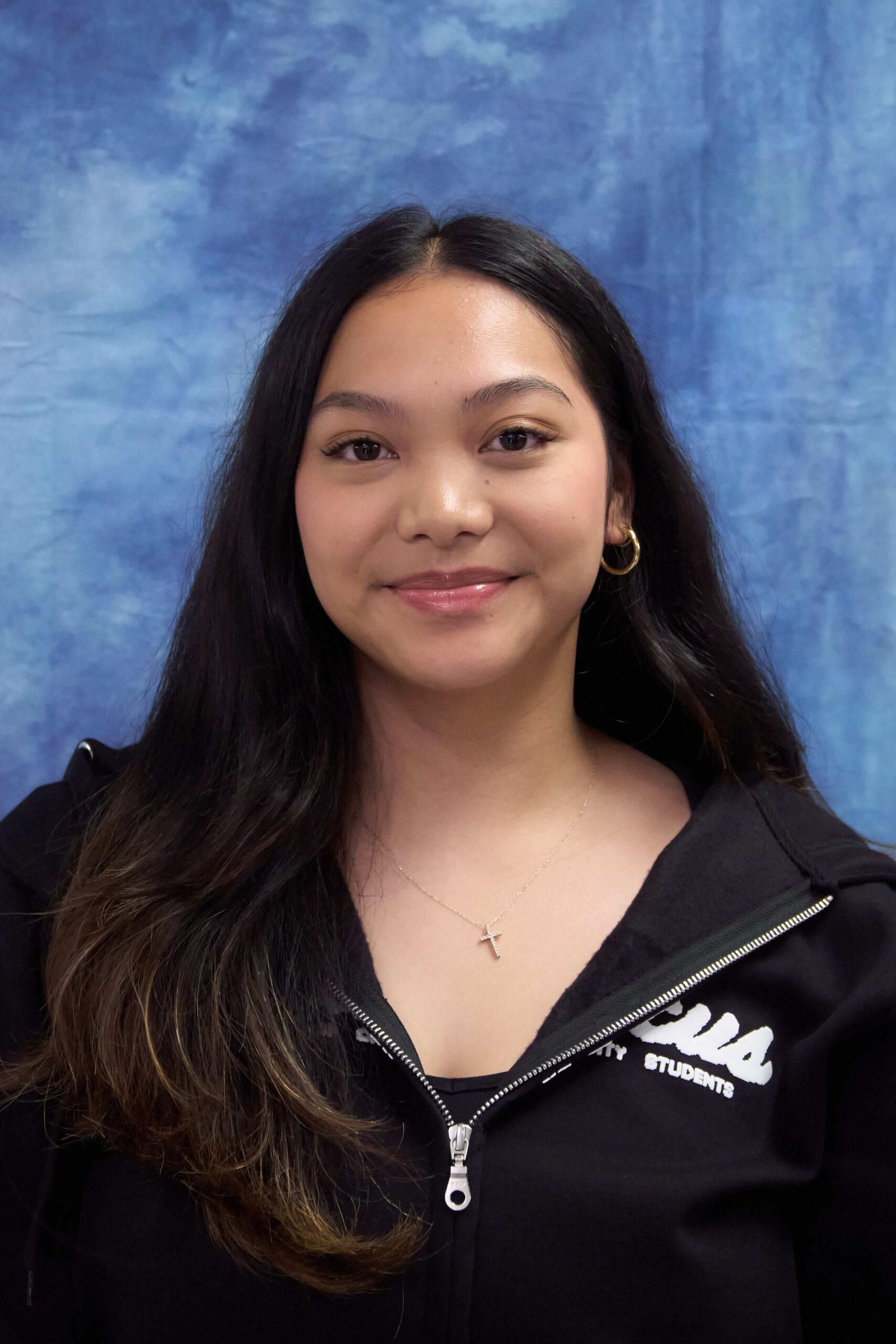
Hi, I'm Samantha! I'm currently studying Kinesiology at McMaster University. Growing up as a competitive swimmer, I've spent most of my childhood training, competing, and learning how important movement is for both physical and mental well-being. With such a strong connection to sport and exercise, my interest in physiotherapy came naturally.
At MVMT Kinetic, I love connecting with patients and helping create a welcoming experience from the moment they walk through the door. One of my favourite parts of the role is getting to meet people from all different backgrounds and being part of their journey toward feeling better.
Outside of the clinic, you'll usually find me spending time outdoors, grabbing a latte, rewatching all the Twilight movies, or planning my next trip.
Ready to work with someone
whose only goal is
to get you better?
One visit. Your switch found. A clear read on what's driving it. Your fix on your phone.
Start My Recovery →151 Bloor St. W · Suite 890 · Yorkville · (647) 957-7761