Release the Tension
Blocking Your
Progress.
Tight muscle guarding that won't respond to stretching or massage. Dry needling releases the source directly — so your rehab can actually do its job.
Start My Recovery →Dry Needling Works Best When—
Dry needling is most effective when tight, overactive muscle tissue is limiting movement or blocking rehab progress — when stretching and manual therapy alone haven't been enough.
- Persistent muscle tightness or "knots" that limit range of motion
- Muscle guarding after injury or surgery preventing loading
- Localised pain that worsens with specific movements
- Restricted range of motion despite manual therapy
- Pain that hasn't responded fully to exercise alone
- Tension-related headaches or jaw pain (TMJ)
How It Works at MVMT Kinetic
-
01
Identify
Assess movement and palpate the source
We assess movement and identify the sensitive muscle areas contributing to pain, restricted motion, or altered mechanics. The needle goes where the loading fault is — not just where it hurts.
-
02
Release
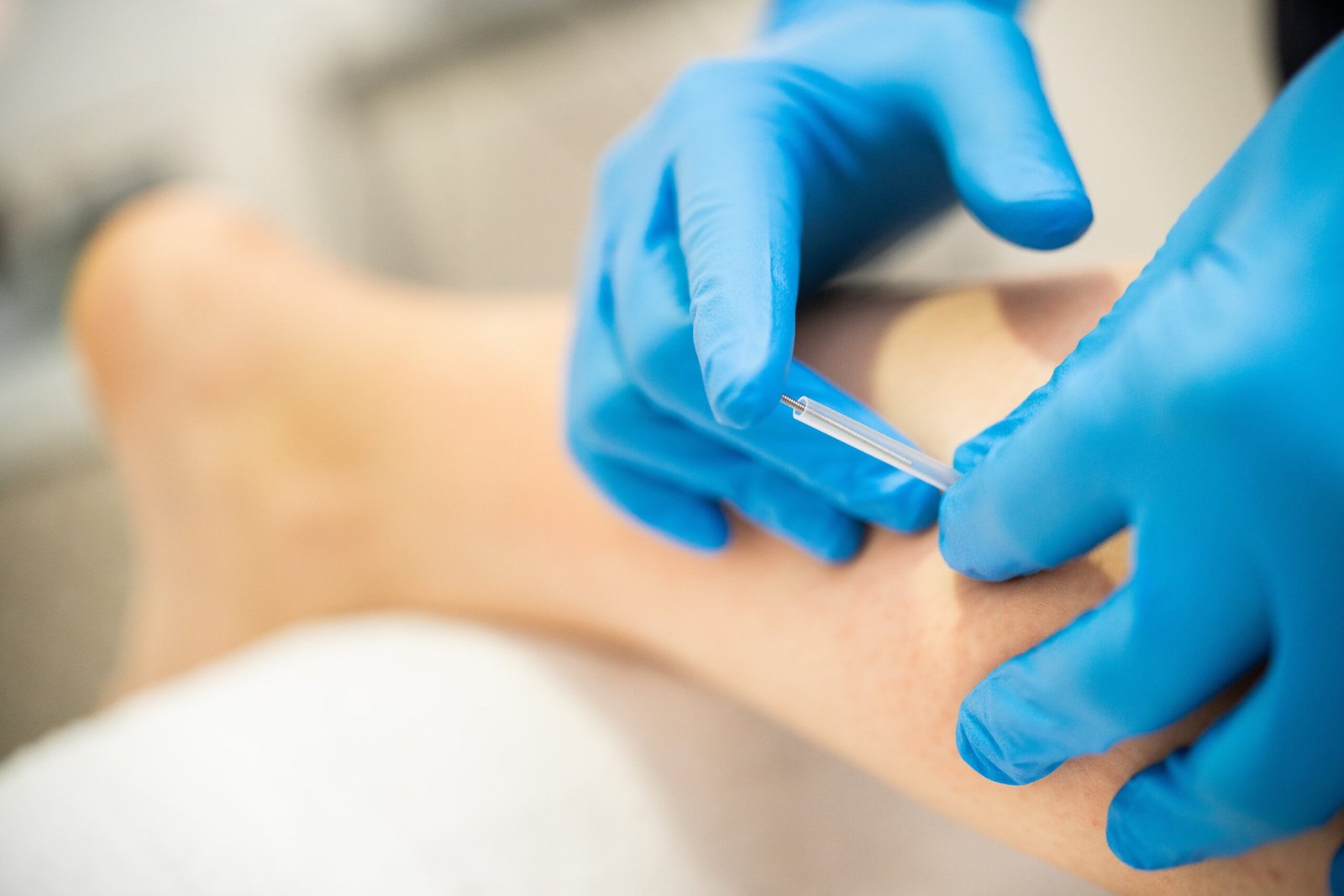
Dry needle release of the trigger point
A thin sterile needle targets the trigger point directly — reducing muscle tone, improving blood flow, and calming pain signalling. Treatment typically takes 5–10 minutes per area and is adjusted to your tolerance.
-
03
Reinforce
Immediate movement to lock in the change
We guide you through 1–2 targeted movements or corrective exercises immediately after needling — to lock in the mobility gained and prevent symptoms from returning.
No referral required · Full assessment on your first visit
During and After Treatment
During treatment, you may feel a brief twitch or dull ache as the needle stimulates the muscle — this is a normal response and a sign the trigger point is responding.
Mild soreness similar to a post-workout feeling can last 24–48 hours. Most people feel looser and more mobile shortly after treatment — often within the same session.
Light movement is encouraged the same day. Dry needling works best when combined with loading and corrective exercise — not as a standalone passive treatment.
Not the Same Thing — Here's the Difference
Both use thin sterile needles. That's where the similarity ends. At MVMT Kinetic, we choose the approach that best fits your presentation — never as a default.
What Dry Needling Accomplishes
- Targets trigger points that limit function — not just where pain is felt
- Rapidly reduces muscle guarding so movement feels easier, often within the same session
- Creates the window for lasting change when paired with targeted corrective exercise
- Improves how your body responds to loading by decreasing resistance before exercise begins
- Minimal downtime — most people return to normal activity the same day
- Ideal when pain or tightness is blocking rehab progress despite doing the right exercises
Before You Book
Dry needling is safe when performed by a trained physiotherapist, but it may not be appropriate if you have certain medical conditions, bleeding disorders, or needle sensitivity. We screen thoroughly before every session — your safety is the first consideration.
Yes — light movement is encouraged, and we often use dry needling specifically to make exercise more comfortable and effective within the same session. Heavy loading immediately after is typically not recommended.
We choose dry needling when pain or stiffness is being driven by overactive muscle tissue that's limiting movement or loading. If your symptoms are better addressed through exercise, manual therapy, or another approach — we won't needle. The goal is the right tool at the right time, not a default technique.
Most patients notice a meaningful change within 1–3 sessions. We reassess every visit — if dry needling isn't producing results, we adjust the plan. We don't continue treatments that aren't moving the needle.
If We Can't Find It, We'll Find Who Can.
You don't need to figure out which technique is right before booking. The assessment tells us. And if we can't identify your mechanical driver — we say so.
You aren't just paying for a session — you're paying for an answer. If we can't find your mechanical driver in visit one, or meaningful change within two to three weeks, we give you a direct roadmap to the specific specialist in Toronto who can. No guesswork. No endless loops.
No referral required · Book online in 2 minutes
Muscle tension blocking
every bit of progress.
One assessment. The source found. Your correction on your phone.
Start My Recovery →151 Bloor St. W · Suite 890 · Yorkville · (647) 957-7761